Inventory Tracking App
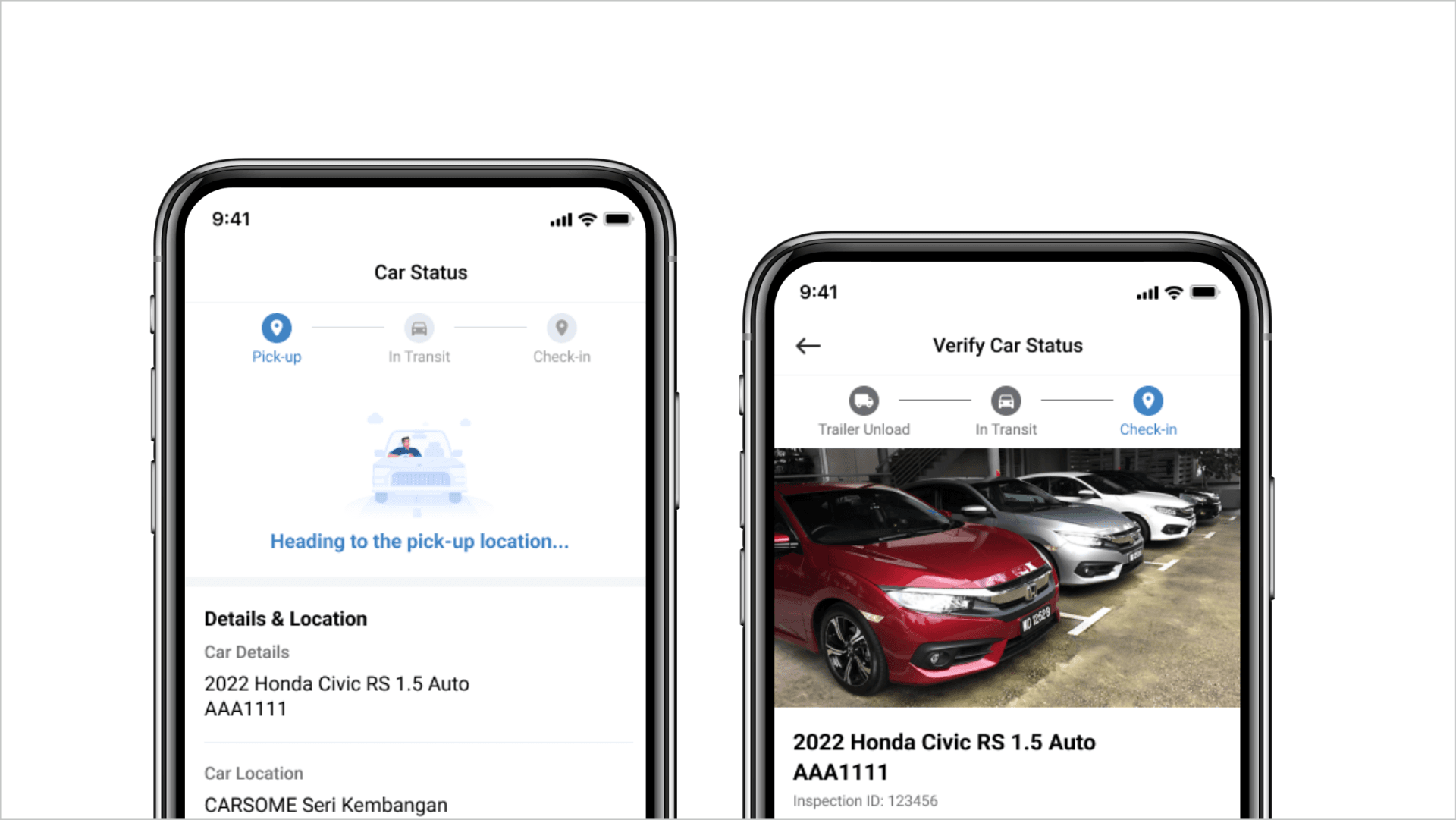
- Staff adoption, up from 75%
- 98%
- Vehicle lead time, down from 4.6
- 2.4 days
- On-time check-in, up from 50%
- 98%
The Context
Carsome's logistics team tracked vehicle movement via Google Sheets, WhatsApp, and email. A digital tool existed. Staff had abandoned it. The workflows didn't match ground reality, so workarounds felt easier than the product.
The Challenge
Field visits and staff interviews found the real problems: confusing navigation, heavy reliance on handovers that assumed physical presence when reality is everyone chasing the next location, pickup and drop-off points with no internet access, and an interface built around system logic instead of the tasks people were actually doing.
The Approach
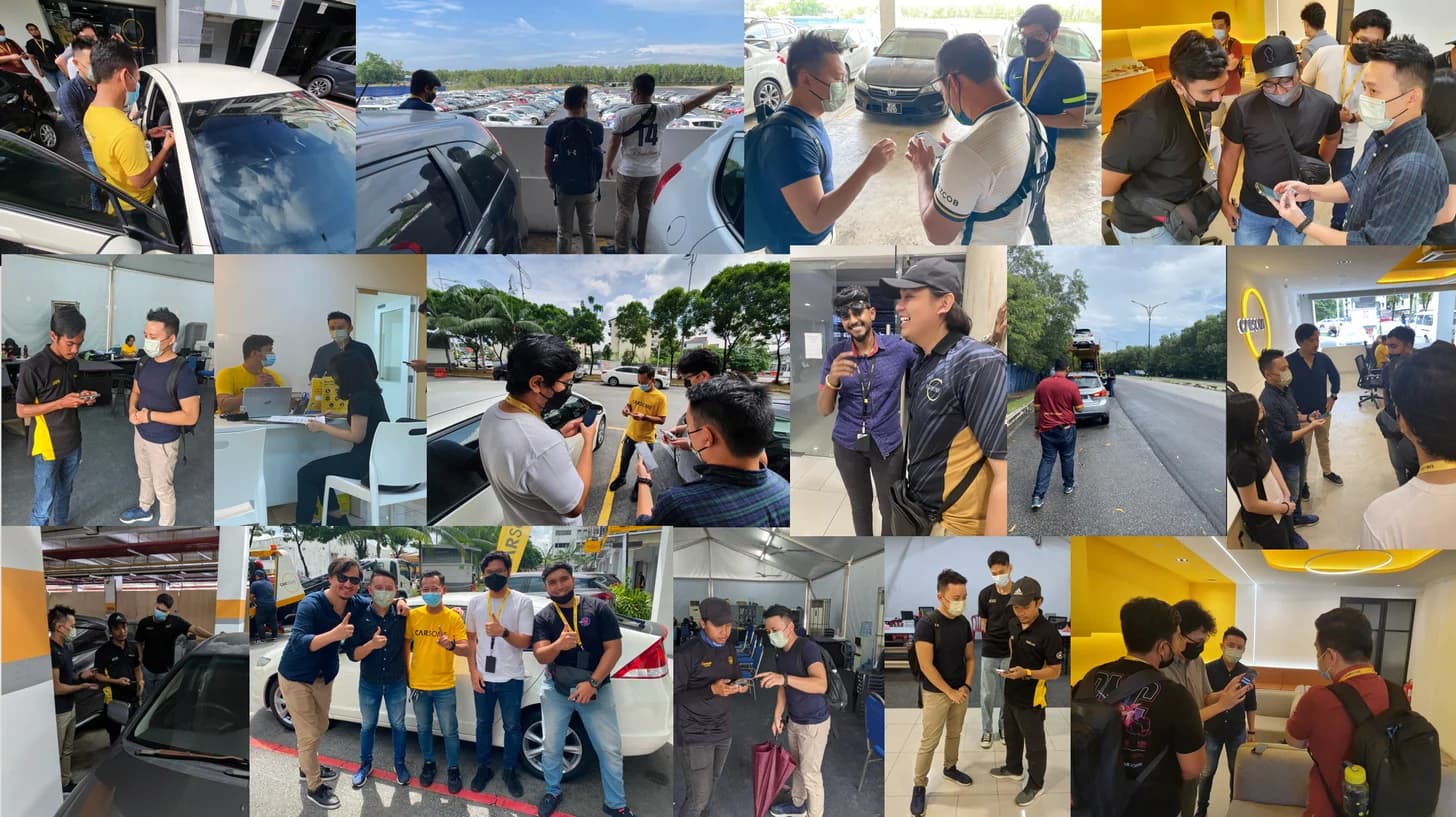
I led a mobile-first redesign grounded in contextual research. Observed staff on the floor, mapped real workflows, tested prototypes in the same environment the app would be used.
Three decisions shaped the outcome: a task-based interface, QR scanning for check-ins, and offline-first syncing for low-connectivity warehouse zones.
Key Design Decisions
QR Check-In
One scan replaces a multi-step process. Faster, no manual errors.
Role-Based Tasks
Auto-assigned by role and location. No handoffs, no delays.
Workflow-First Nav
Structured around real tasks, not system logic. One step to find anything.
Offline-First Sync
Captures and submits data reliably in dead zones. Last adoption barrier, gone.
The Outcome
The app became the operational standard across Carsome's network within months.
- Adoption: 75% → 98%
- Vehicle lead time: 4.6 → 2.4 days
- On-time check-in: 50% → 98%
- Logistics planning accuracy improved, enabling better manpower and capacity forecasting.